A night in an Iban longhouse: what to expect
By Farah Rahman2 min read
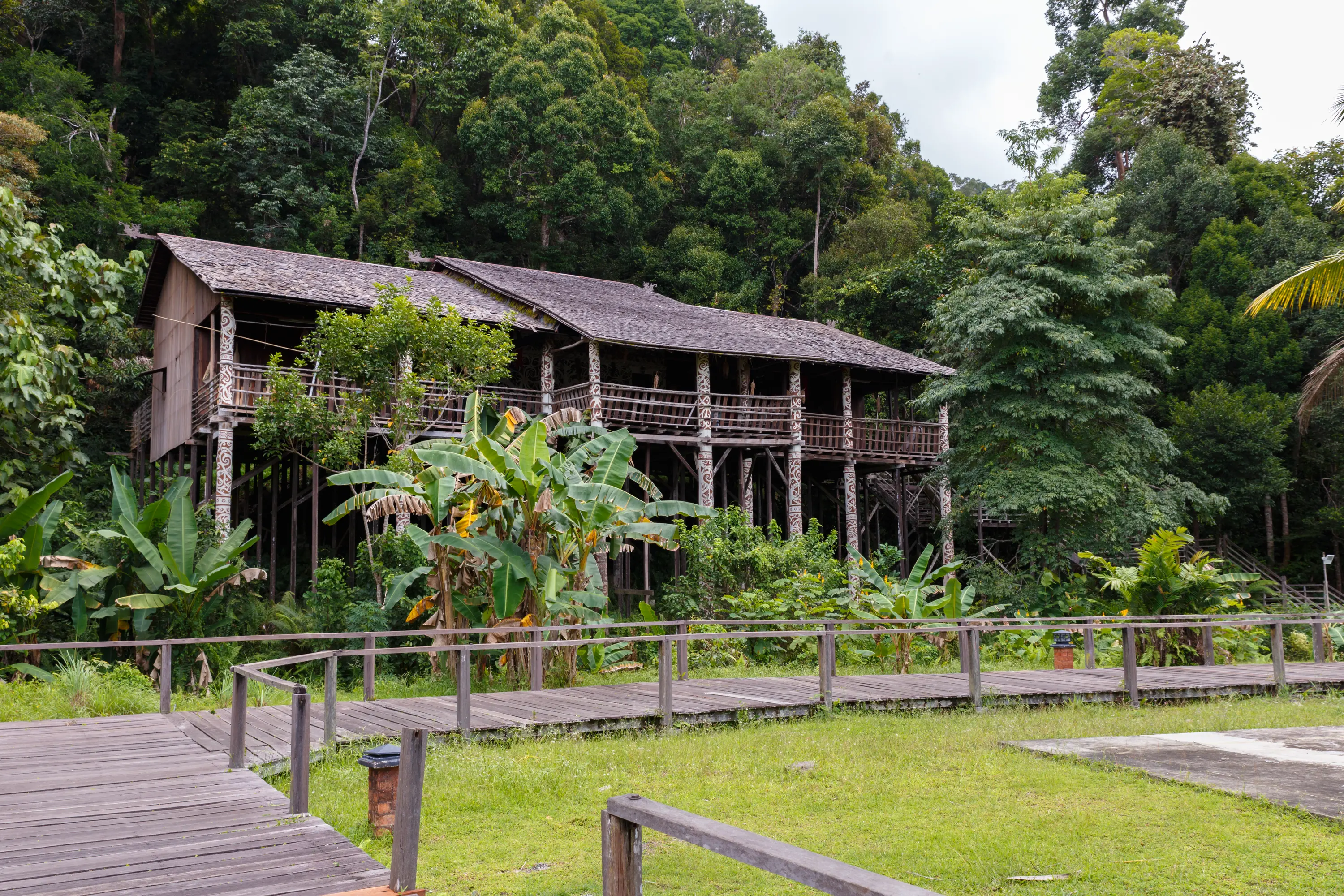
The Iban are Sarawak's largest indigenous group, and many still live in longhouses: a row of family apartments joined by a long shared veranda. Some longhouses are now concrete and have satellite TV. Others, especially upriver, are still built of timber and bamboo. All of them are people's homes.
How a longhouse works
Each family has its own apartment, called a bilik, opening onto the ruai, the covered gallery that runs the length of the building. The ruai is the street, the meeting room and the living room, all rolled into one. It's where you'll spend most of your time.

Arriving as a guest
- Take off your shoes before going up the steps.
- Say hello to the headman, called the tuai rumah, before anything else.
- Ask before taking photos of people or going into a family's room.
- Bring a small gift, like school supplies or food to share. Your guide will help with this.
Food and tuak
You'll probably eat rice with jungle ferns, river fish, and chicken cooked in bamboo. In the evening, you'll be offered tuak, a sweet rice wine. It's polite to take a sip. If you'd rather not drink, touch the glass and pass it on, and nobody will mind.
Sleep, or lack of it
You'll sleep on a mattress under a mosquito net, usually in a guest room or on the gallery. Roosters don't believe in lie-ins, and the walls are thin. Bring earplugs, and enjoy waking up with the whole house.
Why we go
A good longhouse visit is a conversation rather than a show. We only go where we're invited, we keep our groups small, and a share of the cost goes straight to the community. What you get in return is a seat on the ruai, and more stories than you can remember.